Stop Corona Infection by Upward Airflow/Convection
Mehr erfahrenUniversal-Rotations-Intensiv-Bett
Mehr erfahrenBarrier Dikes prevent North Sea Flooding and recover large land surfaces
Mehr erfahrenStop Flooding from Tsunami, Typhoon and Hurrican
Mehr erfahrenFire Extinction and Fire Prevention
Mehr erfahrenCurrent Projects
Universal Rotating Intensive-Care-Bed
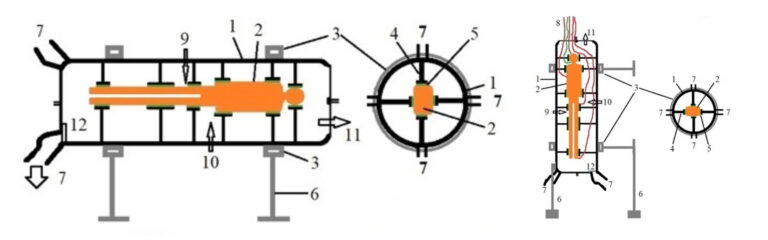
Which eliminates the hard work of nurses and reduces the number of nurses per patient by automatic change of patient front/backside position and horizontal/vertical position. Vibrations, exercises, visitor contact and Wlan facilitate life and contribute to healing of the patient. The development and fabrication costs are amortized by daily fees of bed utilization.
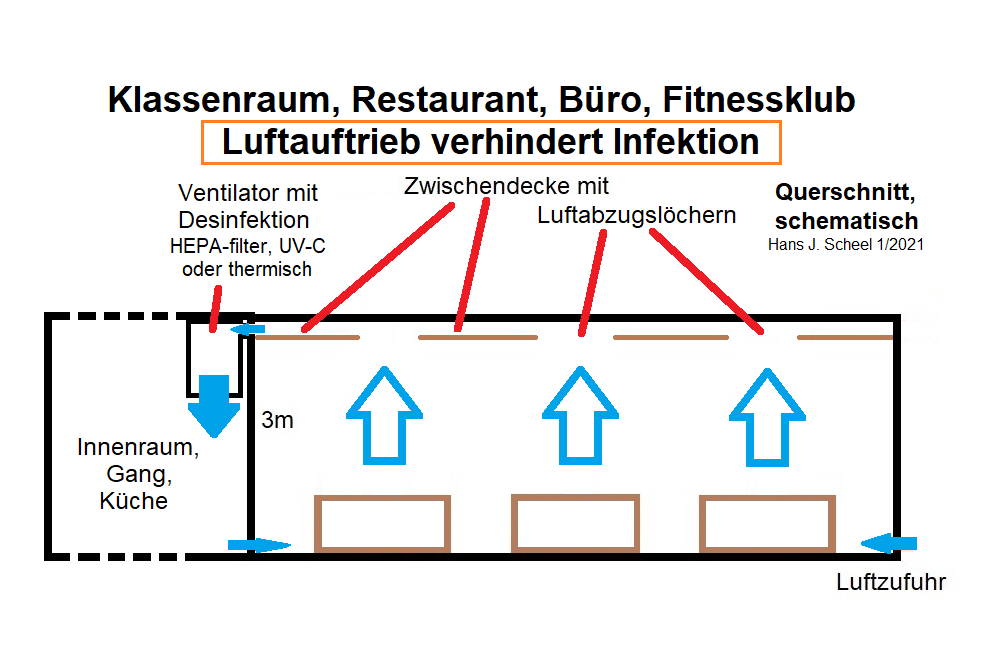
Stop Corona Infection by Upward Airflow/Convection
Most Corona infections inside buildings occur from aerosol-virus-particles floating and enriching in the air. By modest upward or crossing airflow these aerosols are diluted and removed with little effort the details of which have to be proposed by a taskforce “Prevention & Planning” consisting of virus/infection-, aerosol-, aerodynamics-, HVAC-experts and civil engineers/architects. With timely introduction of compulsory upward airflow (summer 2020) millions of infections could have been prevented!
Barrier Dikes prevent North Sea Flooding and recover large land surfaces
Die jetzigen Deiche sind das Ergebnis jahrhunderte-langer Erfahrungen. Die relativ flachen Neigungswinkel sollen die Wellenenergie reduzieren. Durch die Bauweise und die Bepflanzung soll Langzeitstabilität erreicht und Erosion reduziert werden. Allerdings benötigen die herkömmlichen Deiche durch die kleinen Neigungswinkel und grosse Breite enorme Landoberflächen, zum Teil bis zu 100m. Zusätzlich stellt die durch steigende Meereshöhe und heftiger werdende Stürme erforderliche Erhöhung der Deiche grosse Anforderungen, die sehr grosse finanzielle Mittel beanspruchen.
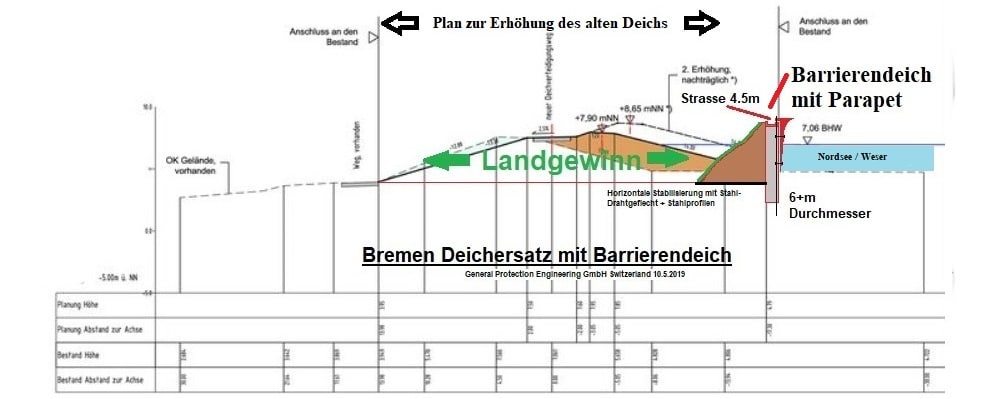
Die neuen Deiche folgen dem Prinzip der Reflektion an der vertikalen Wand. Senkrechte Barrieren ragen aus dem Meer, wobei die Aktion der Meereswellen auf die vergleichsweise kleine aus dem Meer herausragende Oberfläche konzentriert wird. Diese Oberfläche wird weiter reduziert, wenn durch Sturm der Meeresspiegel ansteigt.
Durch die vertikale Anordnung der neuen Deiche werden grosse Landoberflächen frei. Die Figur zeigt die geplante Deicherhöhung Bremen und dessen Landbedarf im Vergleich zum vorgeschlagenen Barrierendeich (rechts auf der Seite des Meeres).
Fire Extinction and Prevention
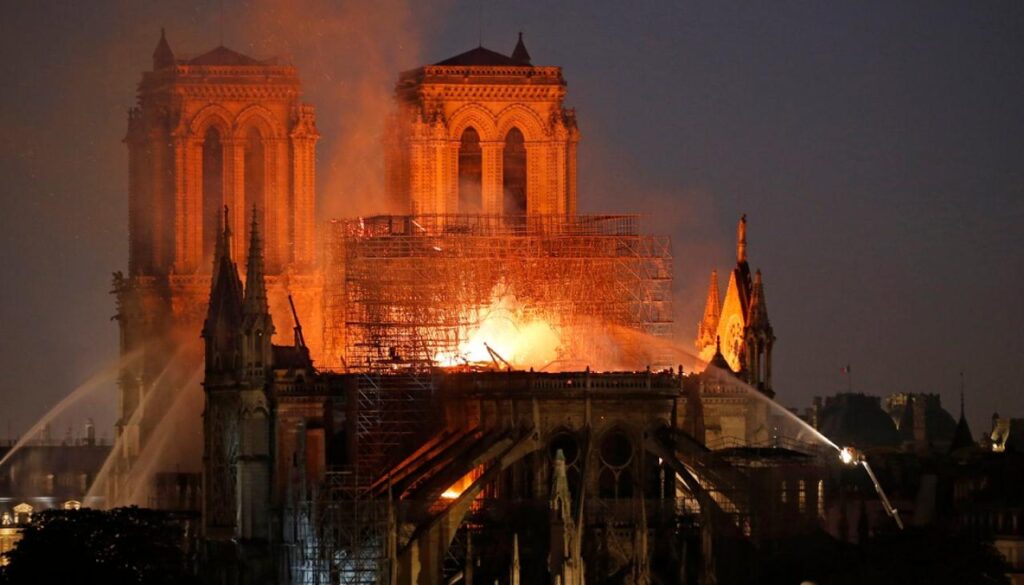
The recent catastrophic fires in California, Australia and southern Europe have destroyed forests and steppes including wildlife, city areas and numerous houses and caused huge damages and tragedies. There is fear that number and dimensions of fires will increase due to climate change. This project describes novel approaches of fire extinction in buildings and to prevent the progress of fires outside the settlements. The principle is demonstrated with the fire of Notre Dame cathedral in Paris April 15, 2019.

Waste Deposit of Megacities
The tsunami flooding barriers described in the finished project TSUNAMI form large sea reservoirs which may be used for depositing waste from mega-cities, by reducing the waste problems of coastal megacities like New York, Tokyo and Mumbay. By emptying the reservoir, covering its ground by water-impermeable clay layer and thick concrete and by building access roads for garbage trucks, the waste problem of these cities will be solved for years.
Large-Scale Fish Farming
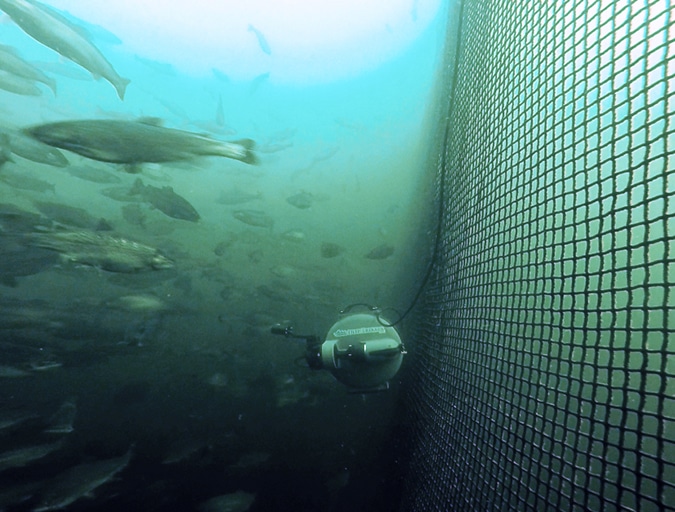
In addition to protecting coastlines against tsunami and storm surges by the tsunami-flooding barriers, there is the important possibility to use the large sea reservoirs between barrier and coast for large-scale fish farming.
Finished Projects
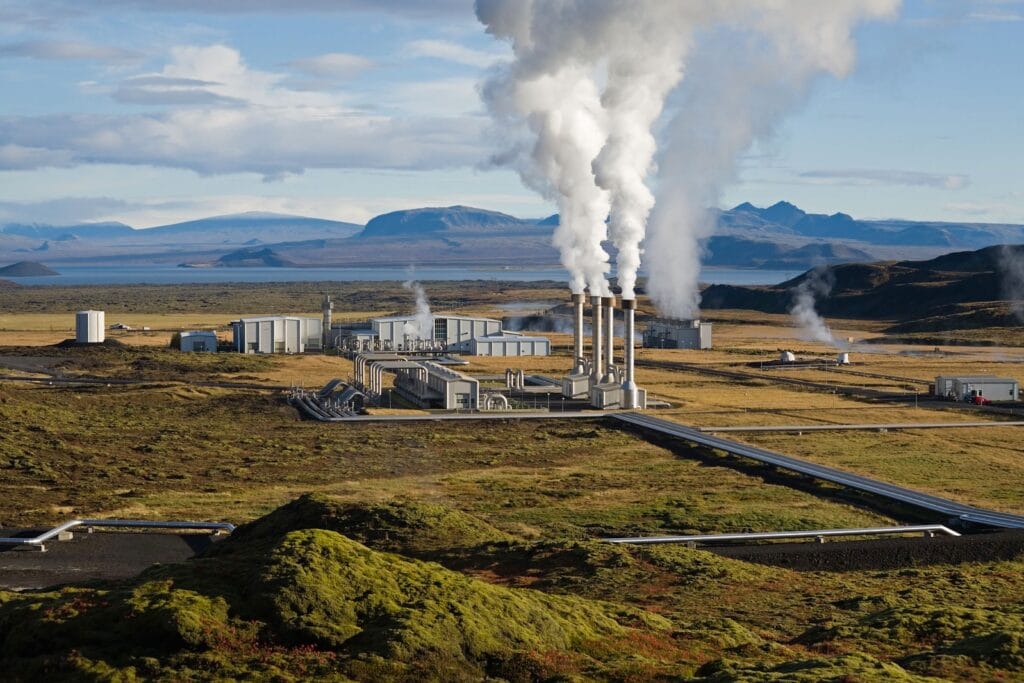
Geothermal Energy
Suppress Earthquakes by Triggering Mini-Earthquakes when Activating the Geothermal Process.
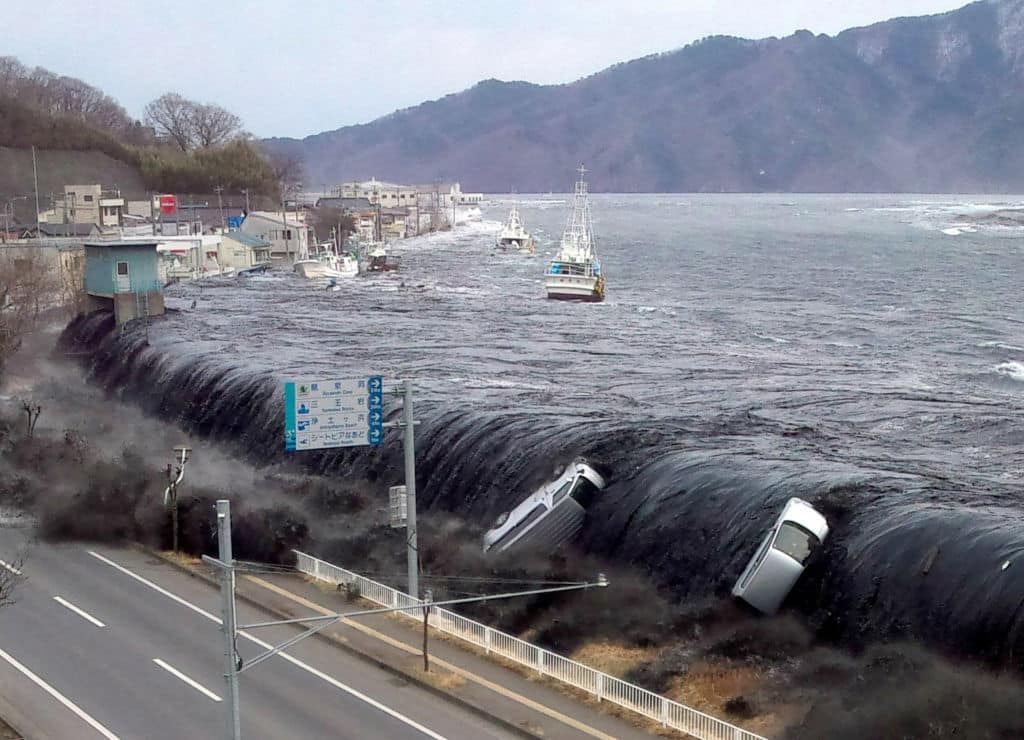
Stop Flooding from Tsunami, Typhoon and Hurrican
Two earthquakes of magnitude 9.1 caused on December 26, 2004 the Indian Ocean tsunami with 228 thousand fatalities and on March 11, 2011 the Tohoku tsunami with 20’000 fatalities followed by the Fukushima nuclear accident. These catastrophes triggered the study of tsunami books and literature and the invention of submerged vertical barriers.
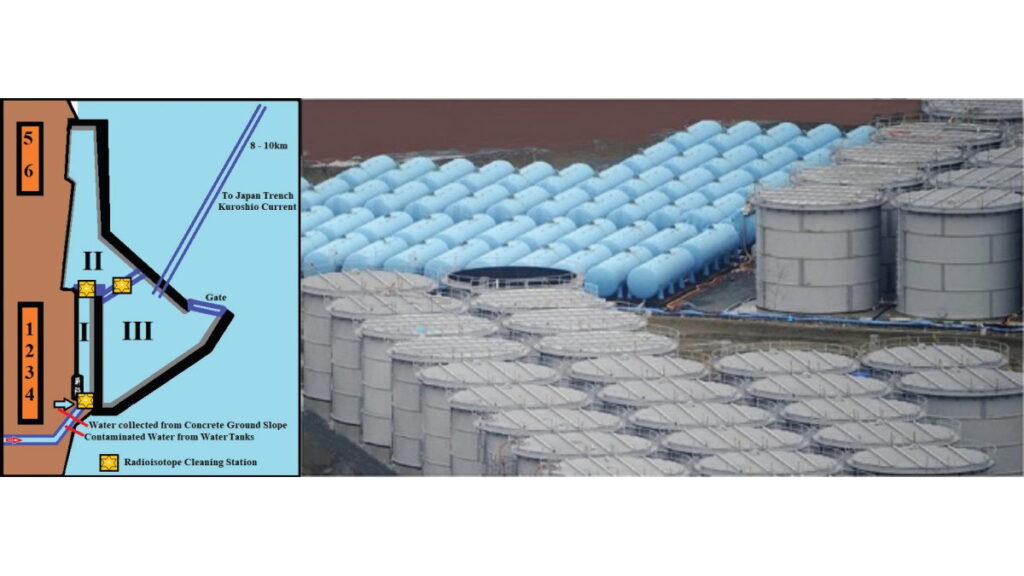
Reduce Fukushima Damages
The Fukushima accident was caused by a sequence of several events: The exceptionally strong earthquake on March 11, 2011 caused the stop of all nuclear reactors of Japan and the Tsunami development in the sea northeast of Sendai. This Tsunami caused the flooding of Fukushima and destroyed the emergency system with pumps to cool the reactor rods, not the reactors. Due to the overheated reactor rods in zirconium alloy shells these reacted with water and formed zirconium oxide and explosive hydrogen. Lorem ipsum dolor sit amet, consectetur adipiscing elit. Ut elit tellus, luctus nec ullamcorper mattis, pulvinar dapibus leo.
Forthcoming Projects
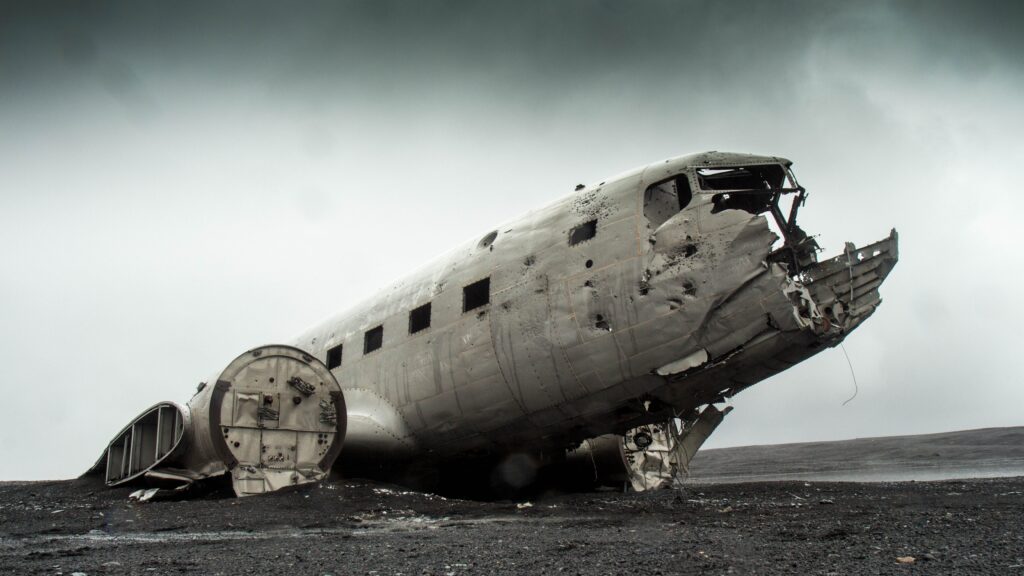
Improved Safety and Flight Organization in Aviation
On September 6, 1970 Hans Scheel was in the airplane for an invited lecture at the British Conference when at the same time four hijackings occurred. The airliners including Swissair and ElAl, after releasing the passengers, had been destroyed by explosions in Zarqa/Jordania. Since then he studied the risks of aviation and developed the concept of an High-Safety-Airliner in combination with optimized airport luggage and passenger organization.
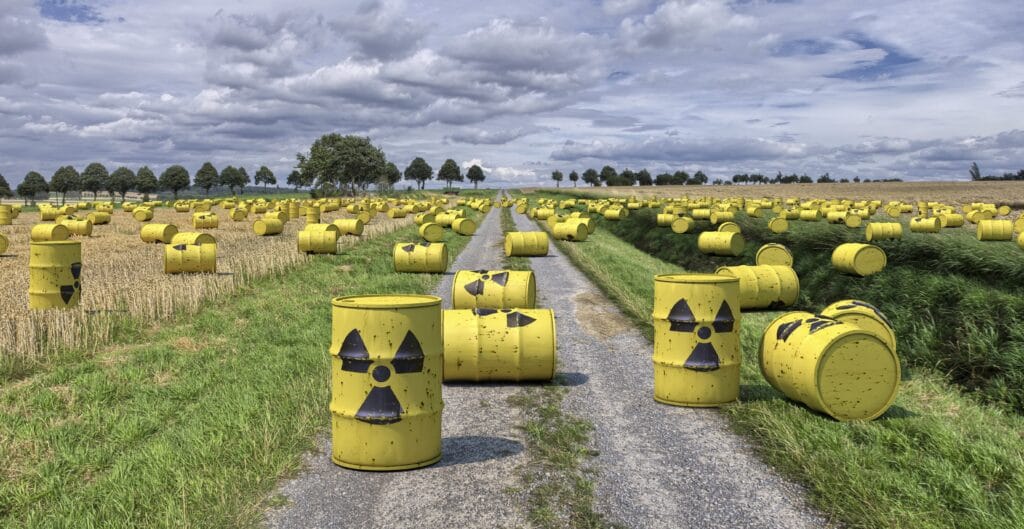
Radioactive Waste
Bisher haben sich Geologen, in der Schweiz die NAGRA, nur für die geologischen Tiefenlager eingesetzt und laufend politische Entscheide in diesem Sinne erwirkt. Es scheinen aber auch andere Lösungen möglich. Dazu gehören trockene Höhen- Zwischen- und Endlager, deren Konzepte für die Schweiz und Deutschland entwickelt worden sind. Fachleute und Politiker müssen sich mit solchen Lösungen ernsthaft auseinandersetzen und bei positiver Bewertung entsprechende Entscheidungen und Gesetzesänderungen vornehmen.